
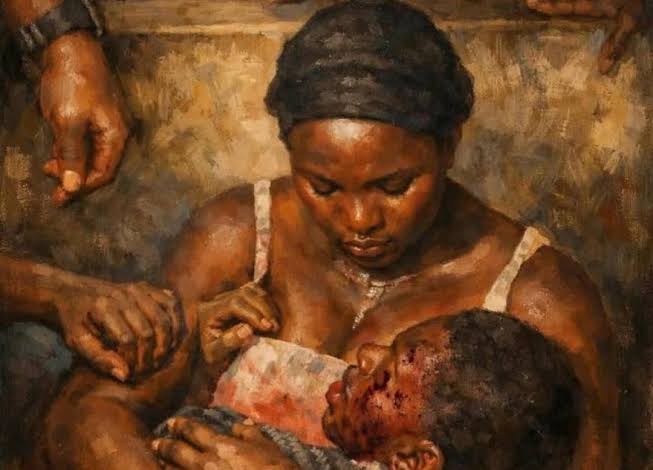
“My son, please wake up, wake up, I know you are there, my son you are not dead. Promise is not dead, my son wake up.”
Palm Sunday was supposed to usher us into the sacred mystery of triumph wrapped in suffering. Christians carried palms. Churches echoed with hymns. The story of Christ entering Jerusalem filled the air. Yet by nightfall on March 29, 2026, a day whose pain returns to us today as we mark its five-month memorial, July 29, 2026; another procession had begun, not one of palms, but of panic; not one of worship, but of wailing. Suspected gunmen opened fire indiscriminately on residents, passersby and innocent people. Bullets interrupted conversations. Fear swallowed the streets. And somewhere within that terrible confusion, a young boy named Promise slipped from time into silence, but silence itself could not silence his mother.
As I reflected on all that has happened, my mind returned to Reverend Nwabuisi Johnpaul’s haunting article, 20-10-20: We Would Not Forget, written in memory of the End SARS massacre. Some dates become more than dates. They become wounds stitched into national memory. They become monuments of pain. They become reminders that history is not only written in ink, but sometimes in blood and tears. 29-03-26 must become one of those dates. Not because violence is new to us, but because this particular moment exposed something deeper than tragedy, it exposed love refusing to surrender.
The image of Mama Promise holding her son has already been called by some The Nigerian Pieta. And truly, the comparison is painfully fitting. Just as the Blessed Virgin Mary held the broken body of Christ beneath the shadow of the cross, this woman held her child beneath the shadow of a broken nation. Still what makes the image unforgettable is not merely the nearness of death, but the stubbornness of love.
My heart is heavy, she said. Those words were simple, yet they carried the weight of oceans. A heart heavy with grief. Heavy with shock. Heavy with the unbearable realization that the body in her arms would no longer laugh, speak or answer her voice again. Still, she held him. Still, she called his name. Still, she hoped against reality itself and perhaps that is the closest human beings ever come to resembling God, when love continues even after hope appears exhausted.
In her, we see the living spirit of 1st Kings 3:26, where the true mother would rather lose everything than lose her child. A mother’s love possesses a kind of sacred madness. It refuses logic. It wrestles with finality. It challenges death itself. Even while people around her urged her to let go, her soul remained chained to her son with cords stronger than despair. This is why the image unsettles us, because it forces us to confront a painful truth: Nigeria is slowly becoming a land where mothers must learn how to cradle tragedy and that should terrify us.
Just recently, during the NIMSAPS Symposium in our school, the final speaker reminded us of the herculean task awaiting us as future priests in this country. At the time, those words sounded inspiring. Now, they sound prophetic, because what does priesthood mean in a country where funerals multiply faster than hope? What does it mean to wear a collar in a nation where fear has become part of daily bread?
Mama Promise is no longer just a grieving woman in a photograph. She is Nigeria. She is every parent afraid for their child. She is every citizen uncertain of tomorrow. She is the embodiment of a country exhausted from carrying pain upon pain without rest and perhaps the greatest danger before us future priests is not persecution, poverty or insecurity.
Perhaps the greatest danger is becoming used to it all. The day we walk past suffering without trembling, we will have lost the heart of Christ. The day bloodshed becomes normal news to us, our vocation would have begun to die silently. Nigeria does not simply need priests who can preach beautiful homilies. Nigeria needs priests whose hearts remain interruptible by human pain. Priests who will smell like wounded streets and broken people. Priests who will stand beside mothers like Mama Promise and remind them that even when society fails, God still kneels beside the grieving, because in the end, our calling is not merely to speak about Christ. Our calling is to become evidence that compassion is still alive.
And so, 29-03-26 must never fade into statistics or hashtags or forgotten headlines. It must remain a mirror before our eyes and a fire within our conscience. For if a mother could continue believing in love while holding death in her arms, then we who are called to serve God must never stop believing that this nation, too, can still rise from the edge of despair. Otherwise, Promise will not be the only thing buried. Hope itself will be buried with him.
ISO-SIA✍️
____________________________________
About the Author



This is amazing. We will not forget.