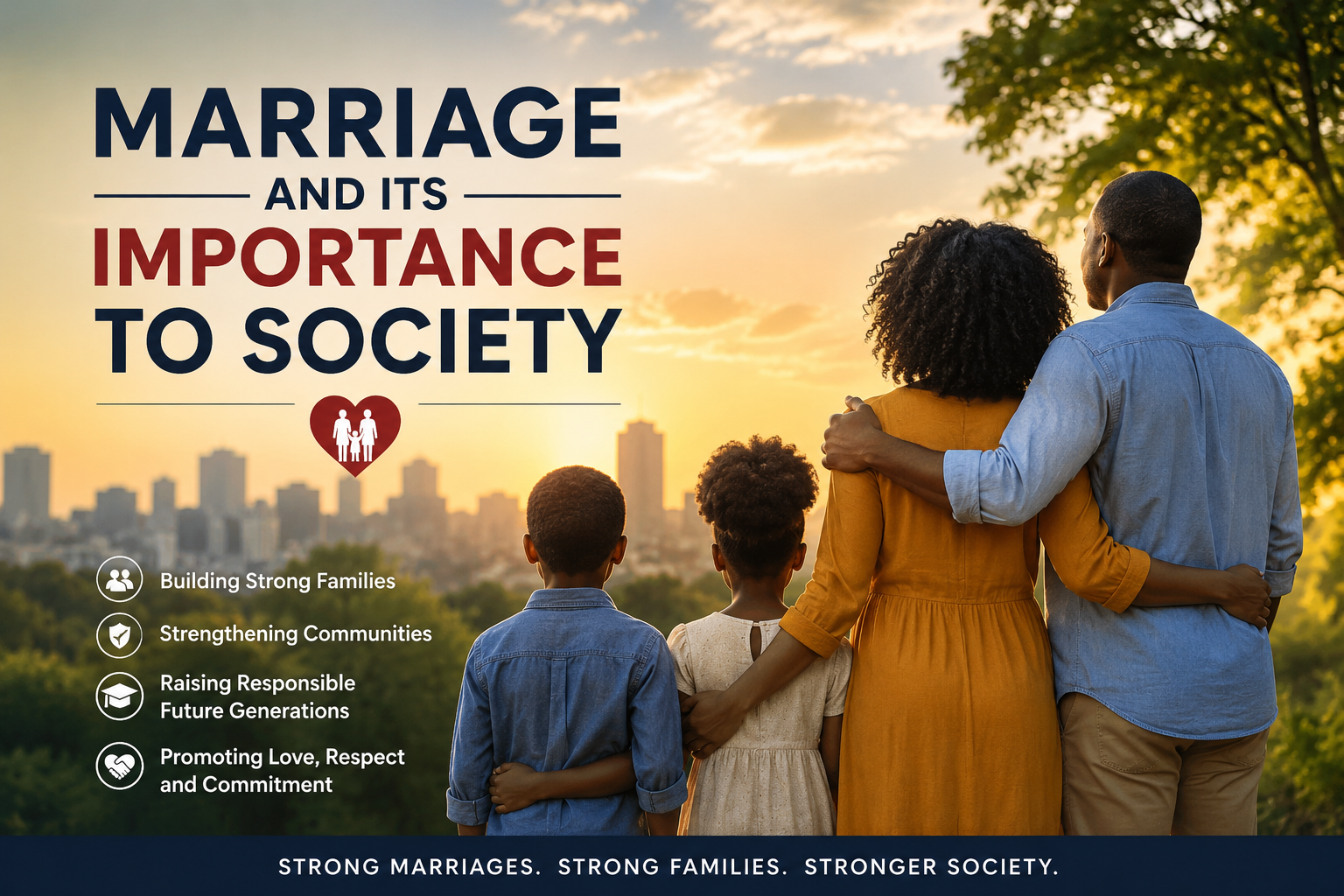
Marriage is more than the union of two individuals. It is one of the oldest and most important institutions in human society, providing a foundation for family life, community stability and the transmission of values from one generation to another. Although cultures and traditions differ in how marriage is understood and celebrated, its significance to society remains profound.
At its heart, marriage creates a framework for companionship, love, responsibility and mutual support. Husband and wife are called to build a life together, sharing joys and difficulties while supporting one another through the different seasons of life. A healthy marriage teaches patience, sacrifice, forgiveness, commitment and respect—qualities that are essential not only within the home but also in wider society.
Marriage also plays a crucial role in raising children. The family is often the first school where children learn language, discipline, morality, responsibility and respect for others. Parents have the opportunity to shape the character of the next generation by the example they provide. When children grow up in loving and responsible homes, they are more likely to develop the emotional and social skills needed to contribute positively to society.
Strong marriages can therefore contribute to strong communities. Families that value responsibility, honesty, compassion and service help create citizens who understand that society is built not merely on individual interests but also on shared responsibilities. When families are stable and supportive, communities can benefit from greater social cohesion and mutual care.
Marriage also provides an important support system for adults. Life inevitably brings moments of uncertainty, illness, financial difficulty, disappointment and loss. A committed spouse can provide emotional encouragement and practical support during such moments. This companionship can make individuals more resilient and better equipped to face life’s challenges.
However, marriage should not be romanticised as a relationship without difficulties. Every marriage requires work. Communication, understanding, forgiveness, fidelity and willingness to compromise are essential. Couples must learn to resolve disagreements without destroying the dignity of one another. Love is not merely a feeling; it is also a daily decision to care, respect and remain committed.
In an age where individualism is increasingly celebrated, society must not lose sight of the importance of family and committed relationships. Marriage, when entered into responsibly and nurtured with love and mutual respect, can become a powerful institution for building character, raising responsible children and strengthening communities.
Ultimately, the strength of society begins within the home. When marriages are built on love, responsibility, faithfulness and mutual respect, they become more than private relationships—they become foundations upon which healthier families, stronger communities and a better society can be built.
About the Author