The House of Representatives is set to launch a major investigation today into the controversial inclusion of the Presidential Foreign Investment Promotion Council (PFIPC)—an agency alleged not to have been legally established—in the 2026 Appropriation Act, where it was allocated approximately ₦1.32 billion.
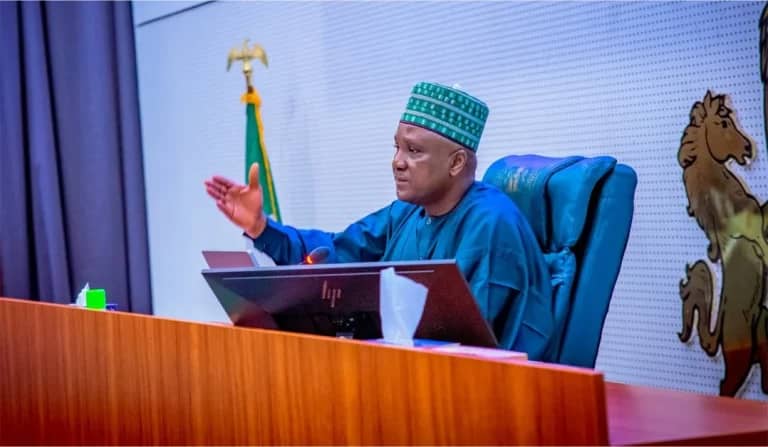
Speaker Tajudeen Abbas will inaugurate the ad hoc committee charged with uncovering how the so-called agency found its way into the national budget. Chaired by Rep. Yusuf Gagdi, the panel will hold its inaugural public hearing at the National Assembly Complex in Abuja, exercising the investigative powers granted to the legislature under Sections 88 and 89 of the 1999 Constitution (as amended).
The investigation was triggered by the arrest of Adeyemi Adeniyi, who allegedly presented himself as the Director-General of the PFIPC. He is accused of orchestrating the inclusion of the agency in the 2026 budget despite its lack of legal existence. Lawmakers are expected to trace the entire budget process—from the Executive’s original proposal to legislative consideration and final passage—to determine exactly where and how the controversial allocation was introduced.
The scandal took a dramatic turn after Adeniyi allegedly claimed that he paid ₦100 million through proxies to the President’s Chief of Staff, Femi Gbajabiamila, to facilitate the creation of the agency. Both the Presidency and Gbajabiamila have categorically denied the allegation, insisting that no such transaction took place.
Among those invited to testify are the Ministers of Finance, Budget and Economic Planning, Industry, Trade and Investment, Foreign Affairs, and Justice, alongside the Governor of the Central Bank of Nigeria, the Chairmen of the EFCC and ICPC, the Auditor-General for the Federation, the Secretary to the Government of the Federation, the Head of the Civil Service, the Director-General of the DSS, the Inspector-General of Police, and other key officials.
However, controversy has already overshadowed the probe. Neither Gbajabiamila nor Adeniyi appears on the committee’s initial list of invited witnesses, prompting accusations of bias. Some lawmakers and public affairs analysts argue that excluding the two central figures could weaken the credibility of the investigation and fuel suspicions of a cover-up.
As public interest intensifies, Nigerians will be watching closely to see whether the committee uncovers how a non-existent agency secured billions in public funds and whether everyone connected to the scandal will be held accountable.
About the Author