
Readings: 1 Kings 3:5, 7–12; Psalm 119:57, 72, 76–77, 127–130; Romans 8:28–30; Matthew 13:44–52
One day, a poor family prayed, asking God to send them a helper. God sent an angel to grant them any three things they wished. The angel came, met the woman and children hungry, and said to them, “Ask any three things and I will grant them to you.”
The woman was overjoyed that God had finally heard their prayers. She thought of money, cars, and houses. But because she was so hungry at that moment, she wished for a pot of jollof rice to appear on the fire. This happened immediately.
Her husband, just coming in from the farm, didn’t know what was going on. He saw something on the fire and went straight to open it. His wife was so angry she wished the pot would stick to his head. Instantly, the hot pot left the fire and attached itself to her husband’s head. It was then the woman realised that she had no other choice left but to wish the pot off her husband’s head — and that’s how all three wishes were wasted on a pot of jollof rice.
This story teaches us that we need wisdom to make the right choices. Wisdom is translated in our first reading as “an understanding mind.” Solomon wanted this wisdom for two things:
- To govern God’s people
- To discern between good and evil
Solomon did not ask wisdom for his own sake — he asked for the sake of others. He knew that power without wisdom leads to disaster. If you want evidence, look around our country Nigeria. How many of us who are leaders in God’s Church still pray for an understanding mind, to be able to lead God’s people and make the right choices?
My dear friends, if God himself were to come by your bedside tonight and offer you a blank cheque, what would you ask for? A pot of jollof rice like the woman in our story? Visas to the US or Canada for you and your household? A job? A husband? A wife? Kids? A thriving business? How many of us have attended crusades, all-night vigils, or other prayer meetings to ask God for a discerning mind — an understanding heart to lead others well? Your guess is as good as mine.
Growing up, I remember hearing this popular song: “Seek ye first oh, the Kingdom of God oh, and His righteousness o, the rest na jara!” How many of us here have heard that song?
The things we often desire may not be bad in themselves — but they’re all jara. It’s great to get visas abroad. It’s amazing to own a thriving business. It’s a blessing to have wonderful, healthy children. It’s satisfying to have all the money in the world. But without the wisdom that comes from God, all of these can become real burdens.
How many of you know Elon Musk — the richest man in the world, whose net worth is valued at $1.1 trillion (for context, that amounts to ₦1,501,500,000,000,000; one quadrillion, five hundred one trillion, five hundred billion Naira)? His personal net worth is nearly three times the size of Nigeria’s entire GDP. On the 6th of February 2026, he took to X (formerly Twitter, which he owns) and wrote, “Money can’t buy happiness.”
That’s someone not yet 60 — he turned 55 in June — already realising that wealth is not the summum bonum, the “utmost good.” If we pay attention to those who have learnt from life, perhaps we too will gain a more discerning heart. Perhaps we too will begin to realise that everything else is jara.
This brings me to the elderly among us — those who embody wisdom and experience, and yet are often forgotten and abandoned. Fittingly, today marks the sixth celebration of the World Day of the Elderly, and Pope Leo XIV has chosen the theme from Isaiah 49:15: “I will never forget you.” May you never be forgotten. Amen.
I recall my pastoral experience in one of the more rural communities of my home Diocese, taking Holy Communion to the sick and elderly every first Friday of the month. There I felt firsthand the loneliness and sense of abandonment many of them carry. Yet in those conversations, I also encountered a wisdom that few seek anymore — a wisdom that surrounds us, yet goes unnoticed.
No wonder Jesus tells us in the Gospel:
“The kingdom of heaven is like treasure hidden in a field, which a man found and covered up; then in his joy he goes and sells all that he has and buys that field.”
“The kingdom of heaven is like a merchant in search of fine pearls, who, on finding one pearl of great value, went and sold all that he had and bought it.”
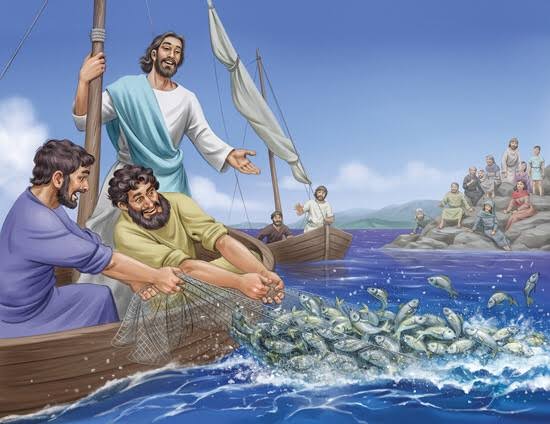
“Again, the kingdom of heaven is like a net which was thrown into the sea and gathered fish of every kind; when it was full, men drew it ashore and sat down and sorted the good into vessels but threw away the bad.”
Ultimately, the Gospel points us to Jesus Christ, wisdom personified — the true Treasure we seek. It brings to mind the song by Elisa Kate:
“You are the treasure that I seeked, You were close to me yet I did not know, The love that I seeked for many years, Was right beside me, Yet I couldn’t feel it…”
That love — for husband, wife, children — finds its meaning in Jesus Christ, love personified. To know Jesus is to be wise. To seek and find him is the greatest treasure we can ever have.
Dear friends, some of us stumble upon this treasure, like the man working in the field who exchanged everything for it. Others search deliberately, like the merchant, and exchange everything for it. This treasure — the summum bonum — is Jesus Christ himself.
Are we searching for God? Have we found Him? Have we found the wisdom hidden in plain sight, in the grey and bald heads of our grandparents and elderly?
I remember the Westlife song:
“Everybody’s looking for that something, one thing that makes it all complete. You find it in the strangest places, places you never knew it could be. Some find it in the face of their children, some find it in their lovers’ eyes — who can deny the joy it brings, when you find that special thing, you’re flying without wings.”
Friends, in life we must be purposeful and intentional about what we search for, what we wish, pray, and work for. When God asked Solomon to ask for anything, Solomon could have asked for fame, riches, or the death of his enemies — yet he chose wisdom. And for this, he was given much more. This was the wisdom the woman who asked for jollof rice lacked: the wisdom that leads us to choose Christ above all else.
We too need this divine wisdom to realise that God is intentional about us. He chose us, predestined us, called us, justified us, and glorified us. This wisdom helps us dig deep in our daily affairs to discover the treasure that is God’s plan for us — a treasure worth selling everything for. We may feel unworthy, but God’s dragnet is wide enough to catch us all.
Let us strive, then, to conform to God’s will, that we may be found worthy of Heaven at the end of life’s race. Amen.
Good morning, dear. Have an amazing Sunday!
About the Author


May God grant me wisdom, knowledge and understanding through Christ our Lord, Amen