When political loyalty becomes more important than national pride, even celebrating Nigeria’s sporting heroes can become a political controversy.
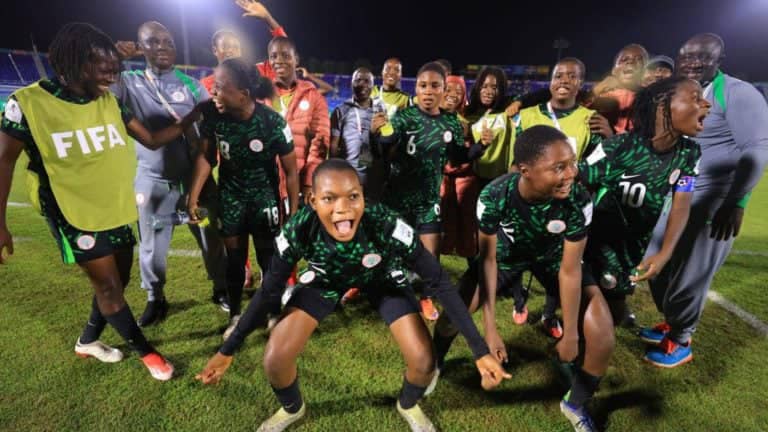
Nigeria has just recorded a historic achievement in women’s football. The Flamingos, our Under-17 women’s national team, defeated Japan 2-1 to become the first African country to win the FIFA U-17 Women’s World Cup.
It was a moment that should have united Nigerians across political, religious, ethnic and regional divides. But what ought to have been a straightforward celebration of national achievement has now generated an uncomfortable conversation about politics, fear and the state of national unity.
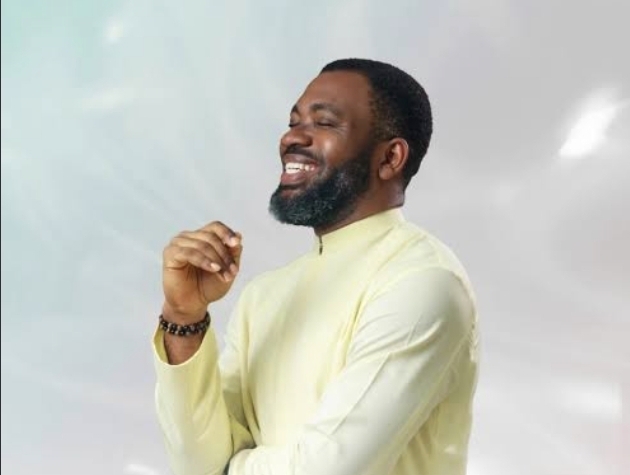
Former Anambra State governor and presidential candidate of the Nigeria Democratic Congress (NDC), Peter Obi, has alleged that he was prevented from meeting the victorious players at the Nnamdi Azikiwe International Airport in Abuja.
According to Obi, he arrived at the airport around 7 a.m. on Monday, November 9, 2026, to board a flight to Enugu when he encountered the returning Flamingos.
Moved by their achievement, he reportedly instructed his Protocol Officer, Jackie Wayas, to find out whether he could approach the players and congratulate them.
What followed, however, was not what he expected.
Obi claimed he was informed that officials of the Nigeria Football Federation (NFF) had objected to his proposed interaction with the team. More disturbing was his account that the officials feared they could lose their jobs if they allowed him to meet the players.
If this account is accurate, then Nigeria has a much bigger problem than an airport disagreement.
WHEN POLITICS OVERSHADOWS NATIONAL PRIDE
Why should congratulating young Nigerian athletes become a matter of political controversy?
These girls did not win the World Cup for the APC, PDP, Labour Party or NDC. They won it for Nigeria.
Their victory belongs to every Nigerian, including those who voted for the government in power and those who support the opposition.
A national team should represent the country, not the political interests of whoever happens to be in government.
The more troubling question is whether public officials are becoming so afraid of political repercussions that they can no longer exercise ordinary courtesy towards individuals perceived to belong to the opposition.
If an elected or aspiring political leader cannot freely congratulate young athletes because of political sensitivities, what message are we sending to the younger generation?
NOT THE FIRST TIME? OBI RECALLS ANOTHER INCIDENT
Obi says the airport experience was not an isolated occurrence.
He recalled a similar incident on March 25, 2025, when he visited Uyo for a World Cup qualifying match.
According to him, although the governor welcomed him at the VIP stand, other government officials allegedly prevented him from greeting the players after the match for fear of losing their jobs.
Two separate incidents, as narrated by Obi, raise questions about the relationship between politics and public institutions.
However, the NFF and the officials involved deserve an opportunity to explain their side of the story. Allegations should not automatically become established facts simply because they come from a prominent political figure.
Nevertheless, the concerns raised deserve public attention.
THE FLAMINGOS BELONG TO NIGERIA, NOT ANY POLITICAL PARTY
There is something fundamentally wrong when political differences begin to determine who can celebrate a national achievement and who cannot.
President Bola Tinubu has also congratulated the Flamingos, praising their determination, discipline and teamwork. He commended the players, coaching crew, NFF and National Sports Commission for their contributions to the historic victory.
That is exactly how national achievements should be celebrated.
The President’s congratulatory message should not be viewed as an exclusive privilege of the ruling party. Equally, an opposition leader expressing admiration for the team should not be interpreted as a political threat.
The players deserve recognition from every Nigerian who appreciates their sacrifice and achievement.
Indeed, these young girls have demonstrated something our political leaders frequently struggle to achieve: the ability to work together towards a common goal despite individual differences.
WHAT KIND OF NIGERIA ARE WE BUILDING?
Perhaps the most important lesson from this controversy is the need to separate public institutions from partisan political interests.
The Nigeria Football Federation is a national sporting institution. Its responsibility is to promote football and protect the interests of Nigerian athletes, not to become an instrument of political exclusion.
Public officials should never be made to feel that showing ordinary respect to an opposition figure amounts to disloyalty to the government.
Democracy does not demand that Nigerians agree politically. It demands that they learn to disagree without treating one another as enemies.
Peter Obi captured this concern when he argued that the Nigeria we aspire to build must have no room for hostility, intimidation or discrimination based on political affiliation.
That is a principle worth defending, regardless of one’s political preference.
A FINAL THOUGHT
The Flamingos have written their names in history. They have given Nigeria a reason to celebrate and Africa a reason to be proud.
But while these young champions were busy making history on the football pitch, an entirely different contest was allegedly unfolding at the airport.
It is a contest between political loyalty and national unity, fear and freedom, partisan interests and the common good.
We must ask ourselves: If a Nigerian cannot freely congratulate another Nigerian because of political differences, how do we expect to build a country where citizens can genuinely trust one another?
Our footballers should not become prisoners of our political divisions.
The Flamingos won the World Cup for Nigeria. Let them belong to Nigeria.
About The Author