There is a question Nigeria has been forced to ask more than once:
When the President is away from the country for weeks or months, who is actually in charge, and how much are Nigerians entitled to know?
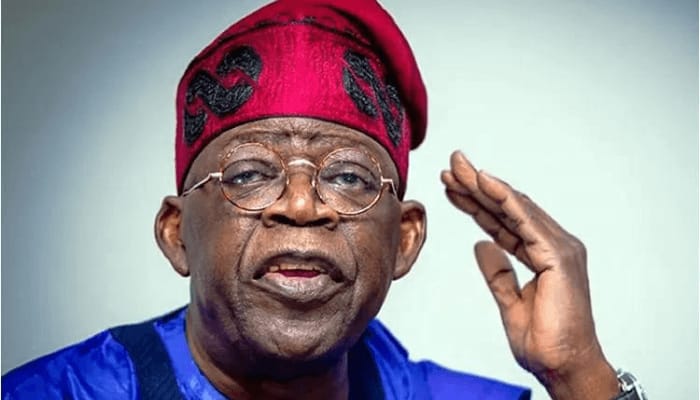
The question has returned with President Bola Ahmed Tinubu’s prolonged stay in Europe.
Tinubu left Nigeria on August 30, 2026, for what the Presidency described as a three-week “working vacation.” He first travelled to London and later moved to Paris, where the Presidency said he held meetings with French President Emmanuel Macron and businessman Vincent Bolloré. On September 21, the Presidency announced that his stay had been extended by a few days.
The controversy intensified when African Action Congress presidential candidate Omoyele Sowore alleged that Tinubu was receiving medical treatment in France rather than simply taking a working vacation. Importantly, Sowore did not publicly provide verifiable medical evidence for that allegation, while the Presidency has said Tinubu is “hale and hearty” and continues to direct government affairs from abroad.
So, at this point, the allegation about hospitalisation should remain an allegation, not a confirmed fact.
But beneath the health speculation lies a much bigger Nigerian problem.
We have seen this movie before
Nigeria’s experience with presidential absence did not begin with Tinubu.
Under President Umaru Musa Yar’Adua, the country experienced one of the most serious constitutional crises of the Fourth Republic.
Yar’Adua travelled to Saudi Arabia for medical treatment in November 2009. His prolonged absence created uncertainty over the exercise of presidential powers because the required constitutional process for transferring those functions to Vice-President Goodluck Jonathan had not been properly activated.
By February 2010, the National Assembly invoked what became known as the Doctrine of Necessity and recognised Jonathan as Acting President. Yar’Adua eventually returned to Nigeria but died on May 5, 2010.
That episode exposed a dangerous weakness in the constitutional system.
And Nigeria subsequently tried to fix it.
Then came Buhari
President Muhammadu Buhari’s administration produced another chapter in the story.
In 2017, Buhari spent about 103 days in London receiving medical treatment. On that occasion, however, Vice-President Yemi Osinbajo formally functioned as Acting President. Buhari had transmitted the appropriate notification to the National Assembly, and Osinbajo performed presidential functions during his absence.
The length of Buhari’s medical absence generated enormous public debate, particularly because the precise nature of his illness was not fully disclosed.
But there was an important constitutional distinction: the public did not necessarily need every detail of the President’s medical file, but the constitutional mechanism for continuity of government mattered.
That distinction remains relevant today.
What exactly does Section 145 say?
This is where the current debate requires some precision.
Section 145 of the 1999 Constitution, as amended, says that whenever the President is proceeding on vacation or is otherwise unable to discharge the functions of office, he is to transmit a written declaration to the President of the Senate and the Speaker of the House of Representatives.
If the President fails or is unable to transmit that declaration within 21 days, the National Assembly is empowered, by resolutions of both chambers, to mandate the Vice-President to perform the functions of President as Acting President.
Therefore, the Constitution does not simply say that a President can only stay abroad for 21 days.
The 21-day provision is connected to the constitutional procedure for transferring presidential functions when the required declaration has not been transmitted.
That distinction is important because some political actors have described the 21 days as a maximum vacation period, while constitutional commentators have interpreted the provision differently.
So what is the real problem?
The deeper problem is transparency.
A president is a human being. A president can become ill. A president can travel. A president can require medical treatment. There is nothing inherently wrong with any of these things.
The problem begins when citizens are left trying to piece together the condition of their own government from rumours, photographs, social media posts, political statements and occasional official announcements.
That is how speculation grows.
If the President is healthy and working from abroad, Nigerians deserve clear information about the constitutional status of his absence.
If he is receiving medical treatment, Nigerians may not be entitled to his confidential medical records, but they are entitled to know whether he remains capable of performing the functions of his office and whether the constitutional arrangements for presidential authority have been properly followed.
Government secrecy creates a vacuum. Rumours quickly rush in to fill it.
From Yar’Adua to Buhari to Tinubu
This is why the issue should not be reduced to whether one supports Tinubu, opposes him, supports Sowore or dislikes his allegations.
The bigger question is institutional.
Why does Nigeria repeatedly find itself debating the whereabouts and health of its President?
Why should citizens have to wait for political opponents to make allegations before demanding clarification?
Why should every prolonged presidential absence generate uncertainty about who is exercising presidential powers?
And why does the country repeatedly wait until controversy becomes intense before constitutional questions receive serious attention?
These questions go beyond Tinubu.
They concern the Nigerian presidency itself.
Nigerians deserve certainty, not rumours
The Yar’Adua experience showed what can happen when presidential incapacity collides with inadequate communication.
The Buhari experience demonstrated that a President can spend an extended period abroad for medical reasons while constitutional authority is formally transferred to the Vice-President.
The Tinubu controversy now provides another opportunity to examine whether Nigeria’s existing constitutional arrangements are sufficiently clear and consistently followed.
The Presidency says Tinubu remains in charge and has continued directing government business from abroad.
Opposition figures and some lawmakers, however, have questioned whether the requirements of Section 145 were properly satisfied. Some lawmakers have even called for the National Assembly to reconvene over the issue.
Those are questions for the relevant constitutional authorities to settle.
But one principle should be beyond political argument:
Nigerians should never have to guess who is governing Nigeria.
A president deserves privacy regarding genuinely private medical information. Citizens, however, deserve transparency about the capacity, constitutional status and continuity of the office they entrusted to that president.
From Yar’Adua to Buhari and now Tinubu, perhaps the lesson is not simply that Nigerian presidents travel abroad.
The lesson is that Nigeria still has work to do in building a political culture where presidential absence does not automatically become a crisis of information, trust and constitutional interpretation.
And perhaps the most important question is not:
“Where is the President?”
It is:
What does the Constitution require when he is away—and are those requirements being followed?
About The Author