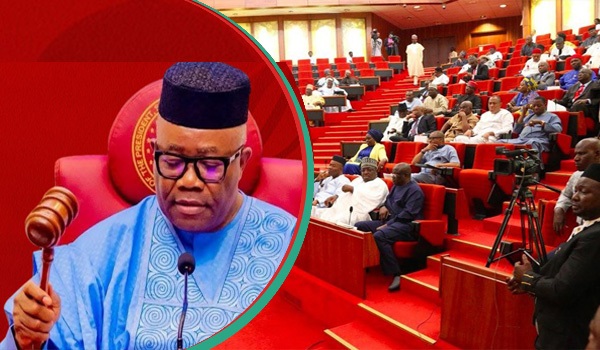
Nigeria’s 36 State Houses of Assembly have unanimously endorsed the proposed constitutional amendment establishing state police. It is a historic political consensus, but the real question is whether decentralising policing will make Nigerians safer or create another instrument for political intimidation.
For years, the argument over state police has divided Nigeria’s political and security establishment. While proponents have insisted that a centralised police structure cannot effectively address the country’s complicated security challenges, opponents have warned that state-controlled policing could become a dangerous weapon in the hands of powerful governors.
Now, that debate has reached a significant turning point.
The National Assembly has confirmed that all 36 State Houses of Assembly have approved the proposed constitutional amendment establishing State Police Services. The endorsement exceeds the constitutional requirement of 24 states and clears the way for the bill to be transmitted to President Bola Tinubu for assent.
It is difficult to ignore the political significance of this development. On an issue that has generated considerable disagreement, Nigeria’s state legislatures have demonstrated an unusual level of consensus.
But unanimous approval does not automatically guarantee successful implementation.
WHY STATE POLICE MATTERS
Nigeria’s security challenges are becoming increasingly complicated. From banditry and kidnapping to terrorism, communal violence, farmers-herders conflicts and rural insecurity, the country needs a policing structure capable of responding quickly to local realities.
A police officer familiar with a community’s geography, language, traditions and security dynamics is potentially better positioned to identify suspicious movements, gather intelligence and prevent criminal activities.
Under the existing centralised arrangement, operational decisions and resources are largely controlled from the federal level. This can create delays and coordination difficulties, particularly in remote communities.
State police could bring security closer to the people, improve intelligence gathering and encourage greater community participation.
It could also strengthen accountability by making state governments more directly responsible for security within their territories.
THE ECONOMIC OPPORTUNITY: JOBS AND LOCAL DEVELOPMENT
Beyond security, state police could create thousands of employment opportunities.
Each state will require trained officers, intelligence personnel, investigators, communication specialists, administrative workers and technical support staff.
For a country struggling with unemployment, this represents a potential opportunity for meaningful job creation, particularly among young Nigerians.
It could also stimulate investment in security infrastructure, training institutions, surveillance technology, communication equipment and other support services.
However, recruitment must be based on competence, physical and psychological fitness, integrity and professional training, not political connections, ethnic considerations or loyalty to governors.
State police must be a professional security institution, not another government employment programme designed to reward political supporters.
THE DANGER OF POLITICAL ABUSE
This is where the excitement must give way to serious reflection.
Nigeria has a history of politicians using state institutions to advance personal and political interests. The fear that governors could turn state police into instruments of intimidation is therefore not imaginary.
What happens when a governor deploys state police against opposition politicians?
What happens when security personnel are instructed to disrupt peaceful protests, intimidate journalists or arrest citizens who criticise the government?
What happens when political disagreements between a governor and a local government chairman become security matters?
These are not hypothetical questions that can be dismissed with political assurances.
Without strong constitutional safeguards, independent oversight and effective complaint mechanisms, state police could become an extension of political machinery.
There is also the danger of ethnic profiling, selective enforcement of the law, unlawful detention and the persecution of vulnerable communities.
THE SAFEGUARDS NIGERIA NEEDS
The success of state police will depend less on the number of officers recruited and more on the strength of the institutions controlling them.
State police commissioners must operate within clearly defined legal boundaries. Recruitment, promotions, transfers and disciplinary procedures must be transparent.
There must be independent oversight bodies with the authority to investigate complaints against officers and sanction misconduct.
The National Assembly must also ensure that the relationship between federal and state police commands is clearly defined to prevent jurisdictional conflicts.
Most importantly, citizens must retain access to justice regardless of who controls the police.
A HISTORIC OPPORTUNITY, NOT A GUARANTEE
The unanimous endorsement by the 36 State Houses of Assembly is a major milestone in Nigeria’s constitutional and security reforms.
But Nigerians must understand that decentralising policing is not the same as decentralising justice.
The objective should be to create a police institution that protects citizens, not one that protects governors; an institution that enforces the law, not one that enforces political loyalty.
Nigeria needs more effective policing, but it also needs stronger democratic institutions.
The real test of state police will not be how quickly governors establish their commands or how many uniforms they distribute.
It will be whether an ordinary Nigerian can challenge a governor, criticise a government, participate in peaceful opposition and still sleep peacefully without fearing the police.
That is the state police Nigeria should be preparing to build.
About The Author