There is a lesson Nigerian politics teaches repeatedly: politics is rarely about permanent friendships or permanent enemies. It is about interests, negotiations, alliances and timing.
As a political analyst, I find it interesting when Nigerians attack fellow citizens simply because they do not support the candidate they support. This becomes even more complicated when ethnic identity is introduced into the argument.
The argument that every Igbo person must support Peter Obi because he is Igbo misunderstands the nature of democratic politics. Nigerians, including the Igbo, are individuals with different political interests, convictions and calculations. Supporting a candidate should not automatically become an ethnic obligation.
The same principle applies to politicians such as Charles Soludo, whose political views may differ from those of Obi’s supporters. Disagreement over politics does not necessarily amount to betrayal.
Consider the other side of the argument. There are Yoruba Nigerians who support Peter Obi, even though Nigeria’s president, Bola Ahmed Tinubu, is Yoruba. Their political choice demonstrates that ethnicity does not completely determine political behaviour.
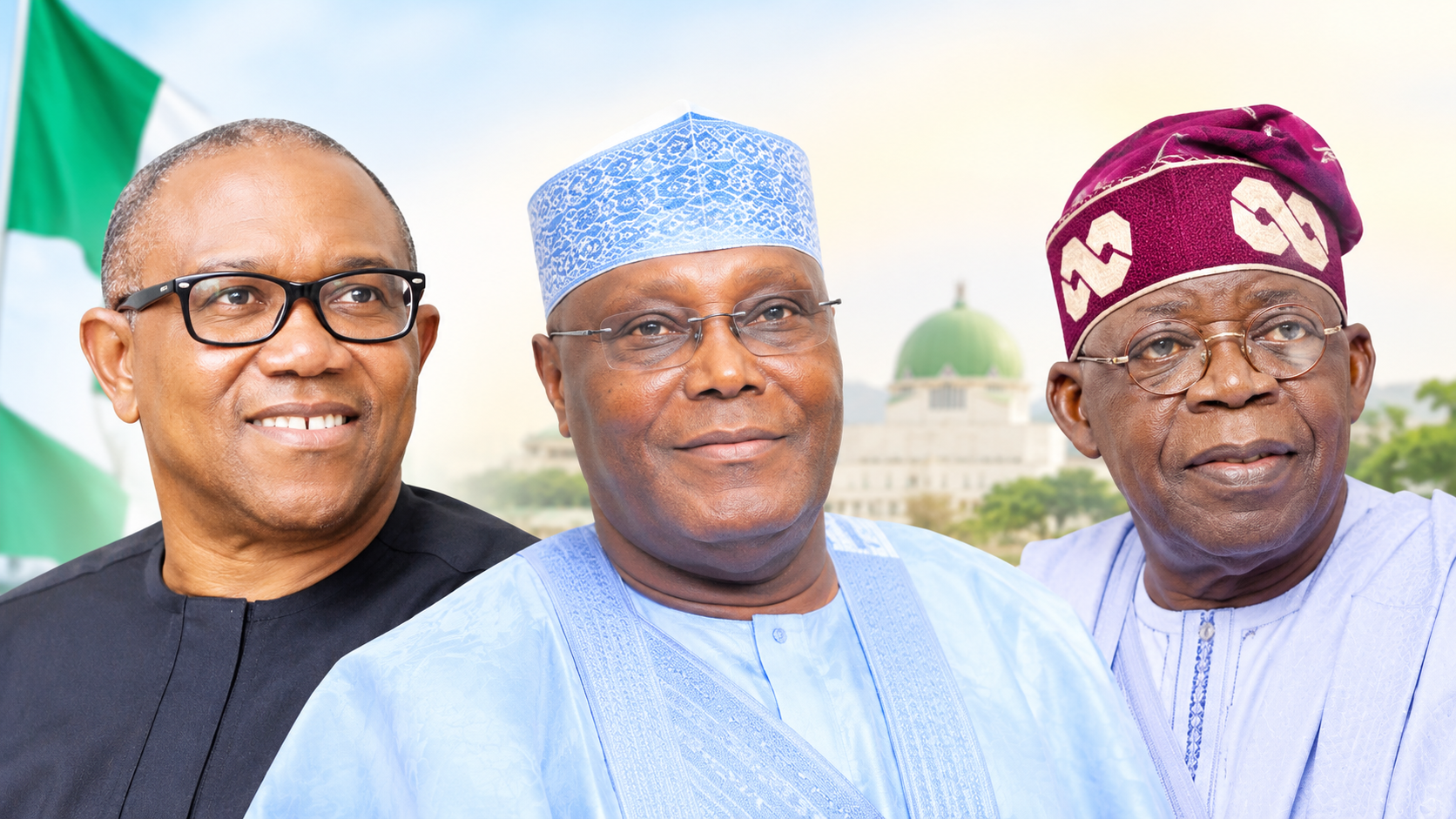
The 2023 presidential election itself demonstrated how fragmented Nigerian voting patterns can be. Peter Obi, Bola Tinubu, Atiku Abubakar and Rabiu Kwankwaso each attracted significant support from different constituencies. Chatham House noted that ethnicity, religion and region remained important factors, but the emergence of multiple strong candidates also changed the traditional two-party dynamic.
This is where political strategy becomes important.
Politics involves marriages, alliances, negotiations and arrangements. Political actors constantly build bridges beyond their immediate constituencies because presidential politics, particularly in Nigeria, requires broad geographical support. Under the constitutional framework, a presidential candidate needs not only the highest number of votes but also at least one-quarter of votes cast in at least two-thirds of the states and the FCT.
Therefore, the question should not simply be, “Who does my ethnic group support?” It should also be, “How does my preferred candidate build a coalition capable of governing Nigeria?”
Suppose an entire ethnic bloc unanimously supports one candidate and that candidate ultimately loses. The community would still remain part of Nigeria, but its political leverage could be affected depending on how other alliances are formed. Political communities therefore have legitimate reasons to maintain relationships across competing political camps.
But strategic politics should not become an excuse for abandoning principles.
Peter Obi, like every presidential aspirant, ultimately has to persuade Nigerians beyond ethnic sympathy. His supporters can argue his case on competence, policy, experience, economic ideas, institutional reform and whatever other measurable qualities they consider important.
The same standard should apply to every candidate.
Democracy becomes healthier when political disagreement is treated as disagreement, not treason.
The time may come when different political interests converge around a common candidate. But before that time arrives, Nigerians should understand that political diversity within an ethnic group is not necessarily weakness.
Sometimes, it is simply democracy at work.
About The Author