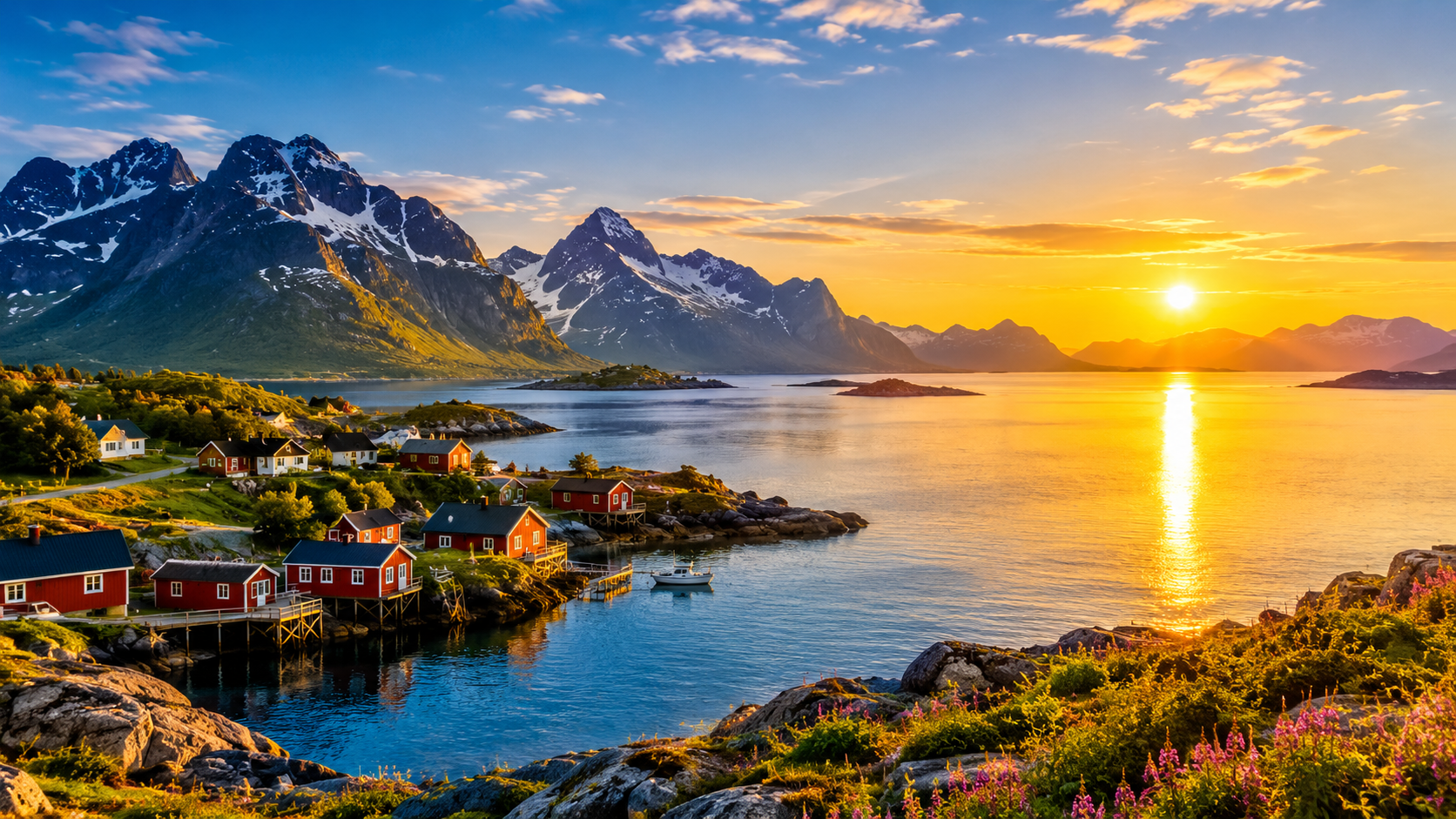
Imagine standing outside at midnight, expecting darkness to wrap the world in silence, only to look up and find the sun still glowing above the horizon. The sky is painted in shades of gold, orange and blue, birds are still singing, and the landscape remains strangely bright. This fascinating phenomenon gives certain regions of the world the enchanting name “The Land of the Midnight Sun.”
The Midnight Sun is a natural phenomenon in which the sun remains visible above the horizon at midnight and continues to shine for several hours or even months. It occurs in areas located within the Arctic Circle in the north and the Antarctic Circle in the south. However, the expression “Land of the Midnight Sun” is most commonly associated with countries and regions in the far north, particularly Norway, Sweden, Finland, Iceland, Greenland, Canada and Alaska.
The phenomenon is caused by the tilt of the Earth’s axis. The Earth is tilted approximately 23.5 degrees as it travels around the sun. Because of this tilt, different parts of the Earth receive varying amounts of sunlight during the year. When the Northern Hemisphere tilts towards the sun during summer, regions near the North Pole experience almost continuous daylight. The closer a location is to the pole, the longer this period of daylight lasts.
Norway is particularly famous for the Midnight Sun. In places such as Tromsø and Svalbard, the sun can remain above the horizon for weeks or even months. In Svalbard, one of the northernmost inhabited places on Earth, continuous daylight can last for several months. During this period, midnight can look remarkably similar to midday.
For visitors, the experience can be both breathtaking and confusing. Imagine having dinner at 11 p.m. while the sun is shining brightly through the window. Imagine hiking at midnight without a flashlight or watching the golden sun hover over snow-covered mountains long after most of the world has gone to sleep. The landscape seems frozen between day and night.
The Midnight Sun also influences the lifestyle of people who live in these regions. During the bright summer months, outdoor activities flourish. People go hiking, fishing, cycling, camping and sightseeing at unusual hours. However, continuous daylight can also affect sleep patterns. Many residents use thick curtains, eye masks and carefully planned routines to maintain normal sleeping habits.
The Midnight Sun has an equally fascinating opposite: the Polar Night. During winter, places within the polar regions can experience periods when the sun does not rise above the horizon. Instead of endless daylight, darkness dominates the landscape, sometimes for weeks or months.
Ultimately, the Land of the Midnight Sun reminds us of the extraordinary movements of our planet. What may appear impossible—a sun shining at midnight—is simply the result of Earth’s remarkable relationship with the sun.
It is more than a geographical curiosity. It is a spectacular demonstration of nature’s beauty, reminding us that our planet still holds wonders capable of surprising, inspiring and captivating the human imagination.
About The Author