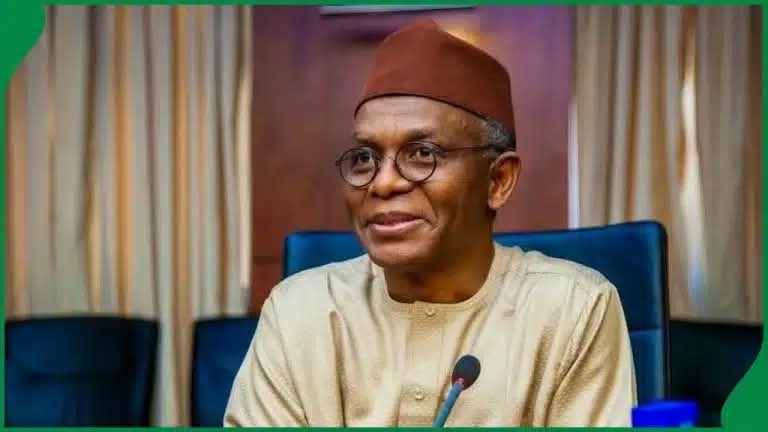
There is an interesting irony in Nigerian politics. A man who once wielded enormous political power, commanded the machinery of government in Kaduna State and was regarded as one of the most influential governors in the North is now fighting to secure his freedom through the same judicial system he once presided over as a governor.
Nasir Ahmad El-Rufai, former governor of Kaduna State, is learning that political power can be temporary. But the circumstances surrounding his prosecution raise an important question: Is Nigeria finally holding powerful politicians accountable, or are anti-corruption agencies being deployed to settle political scores?
El-Rufai’s troubles became particularly pronounced after his political departure from the ruling APC and his alignment with the opposition African Democratic Congress (ADC).
Coincidence? Perhaps. But in Nigerian politics, timing often generates questions that government explanations alone cannot answer.
From EFCC Invitation to Prolonged ICPC Detention
The former governor’s ordeal began in February 2026 when he was invited by the Economic and Financial Crimes Commission (EFCC) over allegations of financial misconduct during his eight-year administration in Kaduna.
Following his engagement with the EFCC, he was transferred to the Independent Corrupt Practices and Other Related Offences Commission (ICPC).
The ICPC officially confirmed that he was in its custody on February 18, 2026.
As of November 21, that is 276 calendar days since the ICPC confirmed taking him into custody, although he was briefly released on compassionate grounds in March to attend his mother’s burial before returning to detention.
That is a considerable period for a citizen awaiting the determination of criminal allegations.
His legal battles have also produced several court appearances and unsuccessful attempts to secure his release.
On June 10, the Kaduna State High Court rejected his second bail application. On October 9, the Court of Appeal in Kaduna dismissed his appeal against the refusal of bail.
These developments have kept him behind bars despite his continued insistence that he deserves a fair trial.
What Exactly Are the Allegations Against Him?
The ICPC investigation is not based on a single allegation.
Following a report by the Kaduna State House of Assembly, which raised concerns about approximately ₦423 billion to ₦432 billion in alleged financial irregularities during his administration, anti-corruption agencies were asked to investigate.
Among the specific allegations is the controversial ₦8.68 billion CCTV surveillance contract awarded during his administration.
On June 25, 2026, the ICPC arraigned El-Rufai, his former aide, Jimi Lawal, and five corporate entities before the Federal High Court in Kaduna.
The amended 11-count charge includes allegations of corruption, money laundering and unlawful financial transactions.
The commission alleges that the contract was awarded to a company that lacked the requisite experience and qualifications and that billions of naira were subsequently moved through different companies.
The defendants pleaded not guilty.
These are serious allegations that deserve proper investigation. Public money is not the personal property of whoever occupies a government house.
However, allegations are not convictions. The prosecution must establish its case beyond reasonable doubt.
The DSS Enters the Picture
Just when the financial investigation was generating public attention, another legal battle emerged.
This time, it involved the Department of State Services (DSS).
The controversy followed an interview El-Rufai granted Arise Television in February, during which he discussed the alleged interception of telephone communications involving the National Security Adviser, Nuhu Ribadu.
The DSS subsequently filed charges against him over alleged unlawful interception of communications and related national security offences.
The case has become particularly interesting because the prosecution relied on statements attributed to El-Rufai during the television interview.
On October 26, the Federal High Court in Abuja dismissed his no-case submission, ruling that the prosecution had presented sufficient evidence for him to enter his defence.
The court consequently adjourned proceedings until November 25.
It is important to distinguish this case from his ICPC detention. The DSS prosecution is a separate criminal proceeding, not the agency responsible for his prolonged ICPC custody.
Interestingly, El-Rufai also instituted legal proceedings challenging actions against his assets and bank accounts. The Federal High Court dismissed one of his suits, holding that filing similar cases before different courts amounted to an abuse of court process.
His legal troubles are therefore far from over.
Is This Justice or Political Persecution?
Here lies the real political dilemma.
Nobody should be above the law, whether a former governor, serving minister, opposition leader or ordinary citizen.
If El-Rufai misappropriated public funds, he should answer for it. If evidence establishes that he violated national security laws, he should equally face the consequences.
But fighting corruption must never become an excuse for selective justice.
Why did these investigations become so politically prominent after his relationship with the ruling establishment deteriorated?
Would the same determination be demonstrated if the individual under investigation remained a loyal member of the ruling party?
These are legitimate questions that the government and the anti-corruption agencies should not dismiss as political propaganda.
There is also the question of proportionality. A prolonged detention must not become punishment before conviction. The constitutional right to fair hearing belongs to everyone, including politicians whose past actions remain controversial.
El-Rufai himself is not without critics.
His eight years in Kaduna generated controversies over demolitions, civil liberties, labour disputes and the treatment of perceived opponents. Former Senator Shehu Sani has repeatedly questioned his record on human rights and respect for court orders.
Those criticisms deserve their own examination.
But there is a fundamental principle of justice: a person’s past conduct does not cancel his constitutional rights.
Nigeria Must Decide What It Wants
As of November 21, 2026, El-Rufai has spent 276 calendar days since entering ICPC custody, with a brief compassionate release in between.
His corruption trial is ongoing. His DSS case has reached the stage where he is expected to present his defence. His bail battles have suffered significant setbacks.
The ICPC insists that it is pursuing legitimate corruption investigations. El-Rufai maintains that he is being politically persecuted.
The truth must ultimately emerge from credible evidence and independent judicial proceedings, not political declarations.
Nigeria cannot build a credible anti-corruption campaign by prosecuting yesterday’s political allies only after they become today’s opponents.
Neither should opposition politicians be allowed to hide behind claims of political persecution when credible evidence points to wrongdoing.
The real test is not whether El-Rufai deserves to be punished. It is whether the Nigerian justice system can establish his guilt or innocence without political interference.
If he is guilty, prosecute him. If the evidence is insufficient, release him.
But do not turn detention into a substitute for conviction.
Because today it is Nasir El-Rufai. Tomorrow, it could be another governor, minister or opposition leader.
And when the institutions of justice become instruments of political convenience, nobody is truly safe.
About The Author