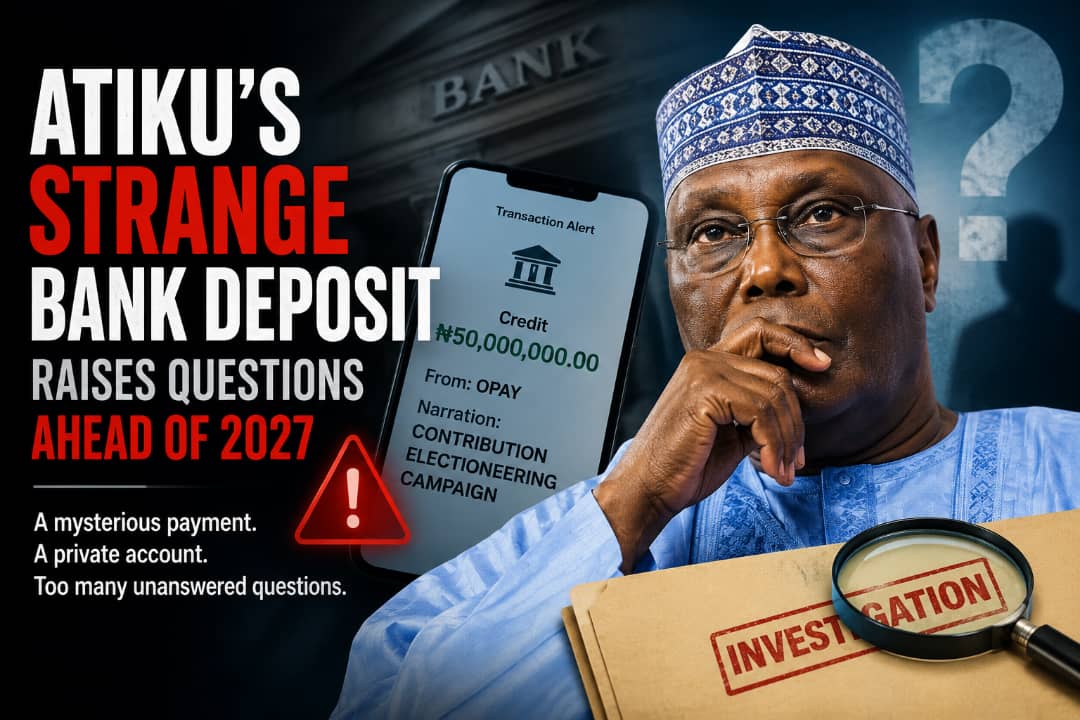
A mysterious “electioneering campaign” payment lands in a private account, triggering questions about who sent it, why it was sent and how the sender obtained the account details.
A seemingly ordinary bank transaction has turned into a political and security puzzle for former Vice President Atiku Abubakar after an unexplained payment was made into his personal account.
The transaction reportedly carried the description “Contribution Electioneering Campaign,” despite Atiku and his political organisation insisting that they neither requested nor authorised the payment.
According to his spokesman, Phrank Shaibu, the former Vice President had no prior knowledge of the individual or organisation behind the transfer. The payment was therefore treated as suspicious rather than welcomed as a campaign contribution.
The concern goes beyond the money itself. Atiku’s camp fears that an unsolicited payment could potentially be used to create a financial connection between him and individuals or organisations with whom he has no relationship.
Such unexplained transactions can become particularly sensitive when the identity and purpose of the sender remain unclear. Questions could eventually arise about the origin of the funds and the circumstances surrounding their transfer.
There is currently no evidence establishing that the money came from a terrorist organisation, drug trafficker, fraudster or any other criminal network. The issue is the uncertainty surrounding the transaction and the possibility that an unexplained payment could later be used to construct a misleading association.
Another question has now emerged that may prove even more difficult to answer.
How did the sender obtain Atiku’s private bank account details?
His spokesman maintains that the account is strictly personal and that its details are not publicly available. That has raised concerns about whether confidential banking information may have been accessed or disclosed without authorisation.
The allegation, if established, would raise broader questions about the protection of sensitive financial information in Nigeria.
The bank involved, reportedly one of the country’s leading financial institutions, has commenced an investigation into the transaction. The aim is to determine where the money originated and establish the circumstances surrounding the transfer.
Further checks reportedly indicated that the payment came through an OPay account. While financial transactions generally leave electronic records that can assist investigators, identifying the immediate account from which the money was transferred may not necessarily reveal the person who initiated or planned the payment.
That distinction is central to the mystery.
For Atiku, the incident is also a warning about the vulnerability of financial privacy. His camp argues that if the private banking details of a former Vice President and major political figure can somehow fall into the hands of unknown individuals, ordinary Nigerians may also face similar risks.
The matter has reportedly been brought to the attention of relevant security authorities as investigations continue.
With the 2027 elections approaching, the timing has inevitably added a political dimension to the controversy.
The biggest questions remain unanswered.
Who sent the money?
Why was it described as an electioneering campaign contribution?
How did the sender obtain details of a supposedly private account?
And, perhaps most importantly, what was the real intention behind the payment?
Until those questions are conclusively answered, the mysterious deposit remains less of a financial gift and more of a political and security puzzle.
About the Author