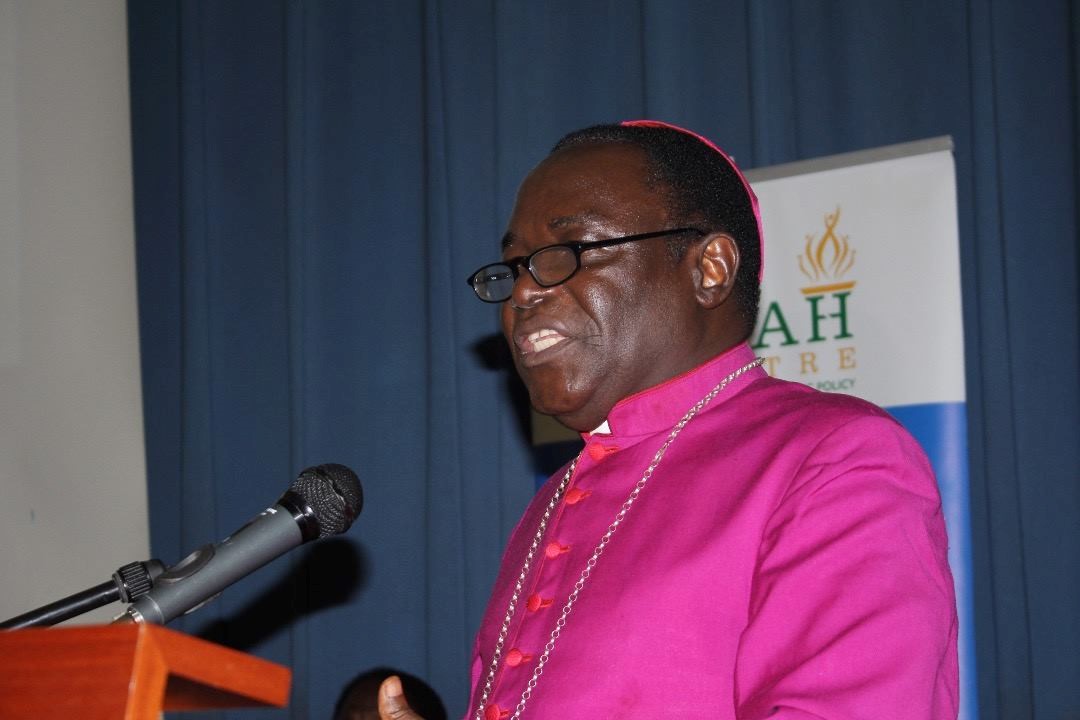
A crown of praise — and a careful warning. At the Goodluck Jonathan Foundation’s Democracy Dialogue in Accra, Bishop Matthew Hassan Kukah lauded the former president for a single act that, he said, helped steady Nigeria’s fragile democracy — then gently urged him to think twice about a possible return to the front line of national politics in 2027.
Kukah told the gathering that Mr. Jonathan’s decision to concede the 2015 election — an act he described as sacrificial and dignified — remains a defining moment in the nation’s democratic story. By stepping back when he might have leaned on the instruments of power, Kukah argued, Jonathan restored a measure of hope and gave Nigerians a vivid lesson in statesmanship.
That praise, however, came wrapped in counsel. The Bishop reminded Jonathan — and his listeners — that the corridors of politics are crowded with well-meaning friends and self-interested operators alike. He recalled how the former president had the means to resist the outcome in 2015, yet chose peace; that same moral authority, Kukah suggested, makes the stakes of any comeback unusually high for both Jonathan and the country.
Kukah underscored his warning with a quotation he attributed to elder statesman General Theophilus Danjuma: “The voice of the devil is not so far from the voice of God. Listen very carefully to those who want to use you as an instrument for the elongation of their interests, and not your interests or the interests of Nigeria.” The Bishop used the adage to urge vigilance against the temptations of being instrumentalised by narrow political agendas.
His advice was pastoral as much as political: reflect, pray, and let conscience — not clamor — decide the next move. Kukah urged Jonathan to weigh any return not against personal ambition, but against the national interest and the fragile ledger of trust that his 2015 decision helped to replenish. “Final decision, it’s your call,” he reminded the former president, stressing that spiritual discernment should guide political choice.
Kukah even pointed Jonathan back to his own record and reflections — recommending that he revisit his book My Transition Hours, which recounts the inner struggle behind the 2015 concession — as a touchstone for measuring whether another run would advance Nigeria’s interest or merely respond to factional pressure.
The message is simple but heavy with consequence: leaders who have built moral capital must be cautious about how they spend it. For a nation wrestling with economic strains, security headaches, and political polarization, the prospect of a high-profile comeback by a former president is not merely a personal decision; it is an event with ripple effects. Bishop Kukah’s counsel — equal parts commendation and caution — leaves Mr. Jonathan with an unmistakable choice: to re-enter the fray on the nation’s behalf, or to let the record of sacrifice continue to speak for him.
About the Author