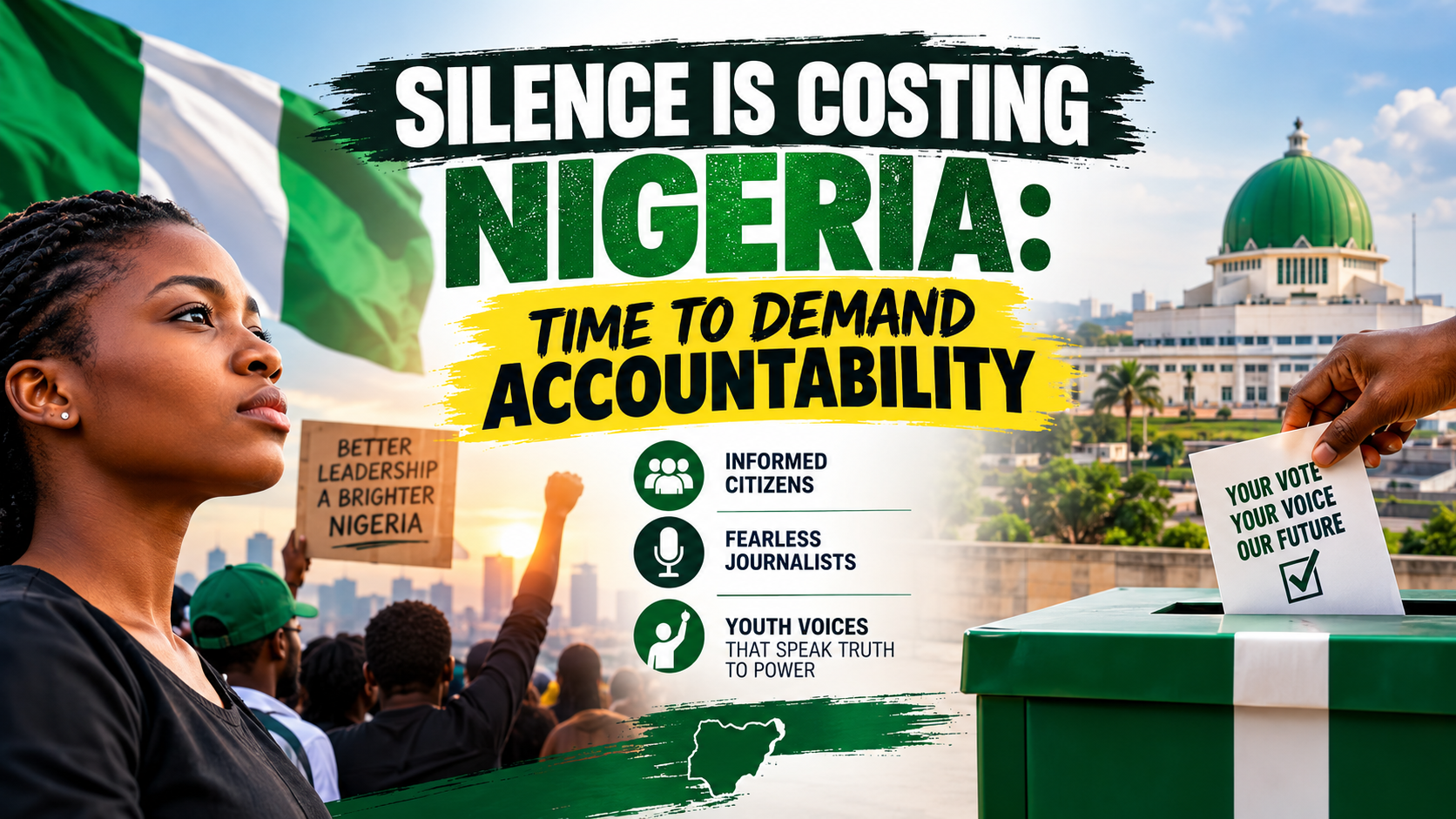
Silence cannot solve our problems. Neither can blind loyalty, political intimidation, ethnic sentiments or religious divisions. If Nigeria must change for the better, its citizens must learn to question those in power, examine their performance and demand accountability without fear or favour.
A democracy cannot function effectively when citizens surrender their voices to politicians. Public office is not a personal inheritance, and leadership is not a licence to govern without scrutiny. Those entrusted with public resources must explain how they use them and demonstrate measurable progress in addressing the needs of the people.
Nigeria needs patriotic citizens who understand that holding leaders accountable is an act of national service. We need fearless journalists who investigate corruption, expose wrongdoing, verify facts and inform the public without allowing political interests or financial inducements to compromise their work. We also need young people who can speak truth to power, even when doing so threatens their personal interests or political affiliations.
However, courage must be guided by facts. Criticism without evidence can become propaganda, just as silence in the face of wrongdoing can encourage impunity. Responsible citizenship requires us to distinguish between verified information, political allegations and personal opinions.
THE 2027 ELECTION: BEYOND POLITICAL LOYALTY
As Nigeria approaches the 2027 presidential election, President Bola Ahmed Tinubu, former Vice President Atiku Abubakar and former Anambra State Governor Peter Obi are among the prominent contenders seeking the nation’s highest office. Their candidacies present Nigerians with an important opportunity to evaluate leadership, policies, experience and the capacity to deliver meaningful change.
The question should not be who has the loudest supporters, the deepest pockets or the most impressive campaign machinery. The more important question is: Who has demonstrated the competence, character and capacity to move Nigeria forward?
President Tinubu must be assessed against the performance of his administration, particularly its economic policies, security strategy, infrastructure development and impact on the living conditions of ordinary Nigerians.
Atiku Abubakar must answer questions about his previous public service, his economic philosophy and how his proposed policies would address Nigeria’s persistent structural challenges.
Peter Obi must equally be scrutinised regarding his record in Anambra State, his economic proposals, his understanding of Nigeria’s complex political realities and his capacity to translate promises into nationwide results.
None should be exempt from scrutiny. Previous achievements deserve recognition, but past failures must also be acknowledged. Campaign promises should be tested against evidence, practical plans and measurable targets.
THE RESPONSIBILITY OF THE VOTER
Nigerians must resist the temptation to evaluate candidates through ethnicity, religion, party loyalty or personal affection. A candidate’s identity should never outweigh the quality of their ideas, integrity and ability to govern.
We must read beyond campaign posters, question exaggerated claims, compare policy proposals and demand clear explanations of how candidates intend to finance their programmes.
Young people, especially, must understand that political participation extends beyond social media arguments. Registering to vote, obtaining a Permanent Voter Card, verifying information, rejecting vote-buying and protecting the integrity of the electoral process are practical expressions of patriotism.
Ultimately, democracy is not sustained by politicians alone. It depends on citizens who remain informed, journalists who pursue the truth, institutions that enforce the law and leaders who accept responsibility for their decisions.
Nigeria cannot build a better future by rewarding incompetence and punishing honest criticism.
Our silence will not hold leaders accountable. Our tribal sentiments will not put food on our tables. Our religious differences will not secure our communities. Only informed choices, responsible citizenship and accountable leadership can move the country forward.
The 2027 election must therefore be more than a contest for political power. It must be an opportunity for Nigerians to demand better governance and make their votes count.
The future of Nigeria is too important to be left entirely in the hands of politicians.
Speak up. Ask questions. Examine the evidence. Demand accountability. Nigeria belongs to all of us.
About The Author