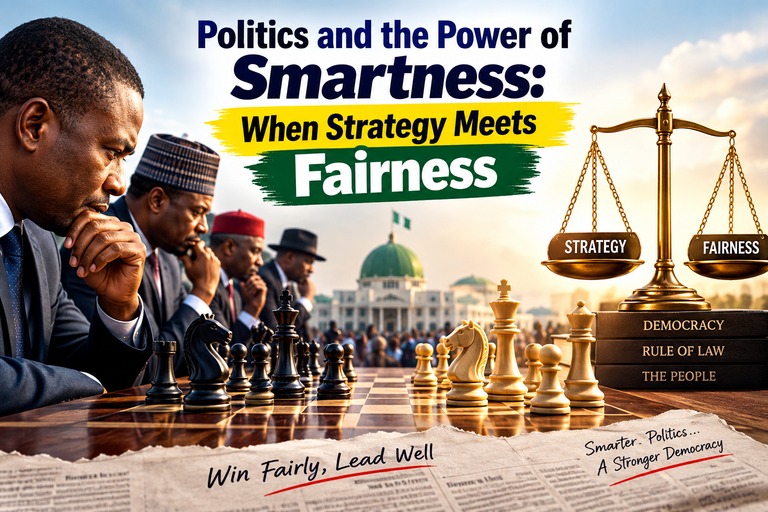
There is a powerful lesson hidden in every political promise: a promise is not a permanent passport to power. It is a commitment that must eventually be measured against results.
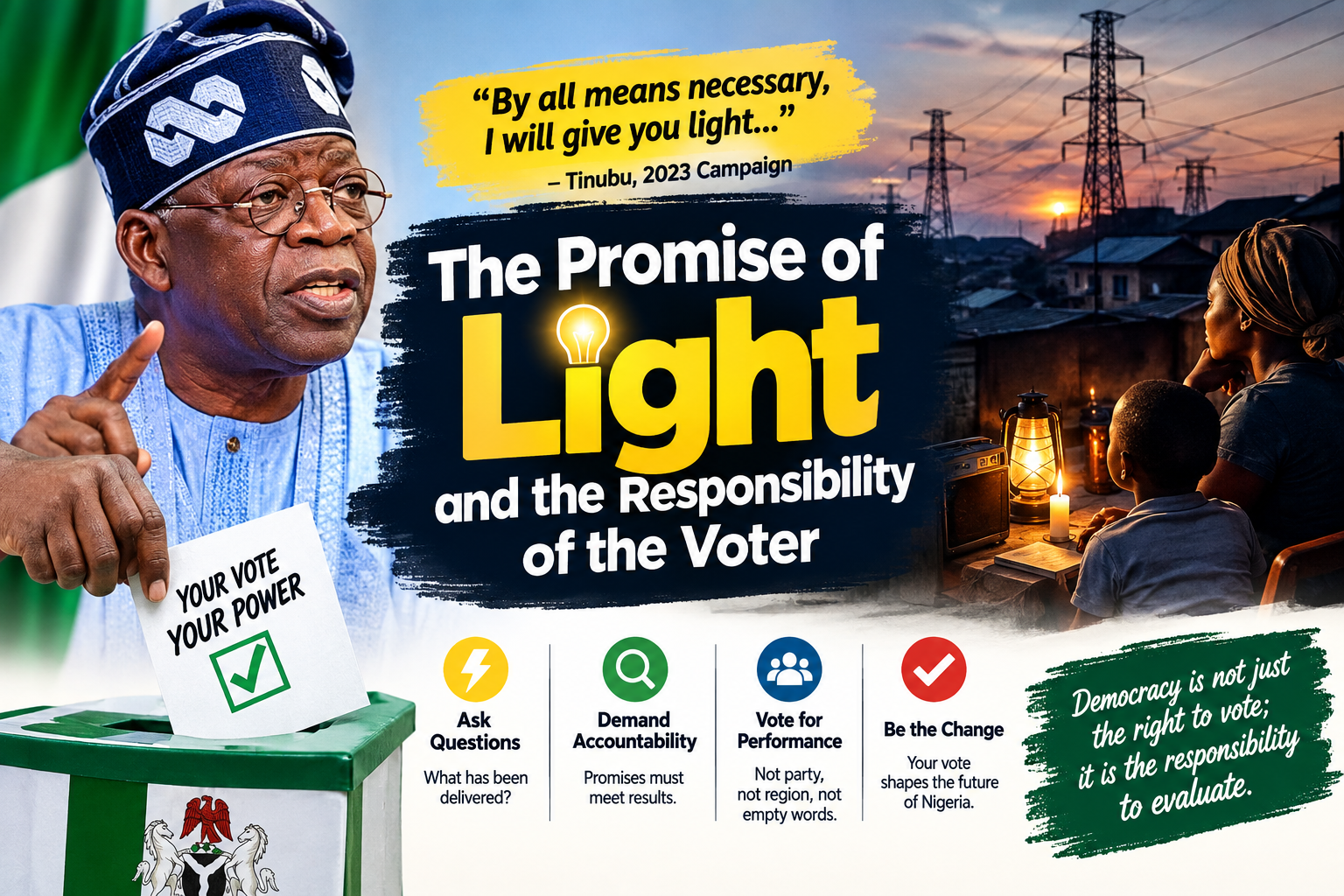
During the 2023 campaign, then presidential candidate Bola Ahmed Tinubu made a strong pledge concerning electricity. He told Nigerians, in essence, that he would provide light and challenged voters not to support him for a second term if he failed to deliver.
Today, Nigerians are preparing for another election cycle, while the electricity question remains one of the country’s most frustrating challenges.
This is where voter education becomes important.
The issue is not whether President Tinubu has done nothing since taking office. His administration can point to reforms and achievements in several sectors. But elections should not be treated as examinations in which a candidate chooses only the questions he wants to answer.
Promises must be measured against outcomes.
If electricity was presented as an important campaign commitment, Nigerians have every democratic right to ask: What has been achieved? Has electricity supply significantly improved? Are businesses spending less on generators and diesel? Are households enjoying more reliable power? Have the challenges in the power sector been substantially reduced?
These are legitimate questions, not hatred.
And this applies to every politician, regardless of party.
The mistake Nigerian voters must avoid is allowing political loyalty to replace accountability. A candidate should not receive your vote simply because he belongs to your party, comes from your region, speaks your language, or attacks the politician you dislike.
Vote for performance. Vote for character. Vote for competence. Vote for credible plans. And most importantly, judge promises against evidence.
President Tinubu should also understand that reminding Nigerians of his promises is not an act of hostility. It is democracy at work.
If a politician tells citizens, “If I fail, don’t vote for me,” citizens should take those words seriously.
The voter does not owe any politician a second term.
The politician must earn it.
Therefore, as 2027 approaches, Nigerians should ask every candidate the difficult questions. What did you promise? What have you delivered? What failed? Why did it fail? What will you do differently?
And when the answers come, voters must resist propaganda from all sides and examine the evidence.
Democracy is not simply the freedom to vote.
It is the responsibility to remember, question, evaluate and decide.
If the President believes he has fulfilled his promises, let him present the evidence. If Nigerians believe he has fallen short, they also have the constitutional right to express that judgment at the ballot box.
In the end, the most powerful campaign slogan should not be “Vote for me.”
It should be:
“Show us what you have done, and let the people decide.”
About The Author