The Presidency’s directive ordering the Economic and Financial Crimes Commission (EFCC) to immediately unfreeze the accounts of the Osun State Government is, on its face, a welcome development. It helps restore constitutional order, eases political tension, and acknowledges that freezing the accounts of a federating state is not a matter to be handled lightly.
But beyond the directive lies a far more troubling issue.
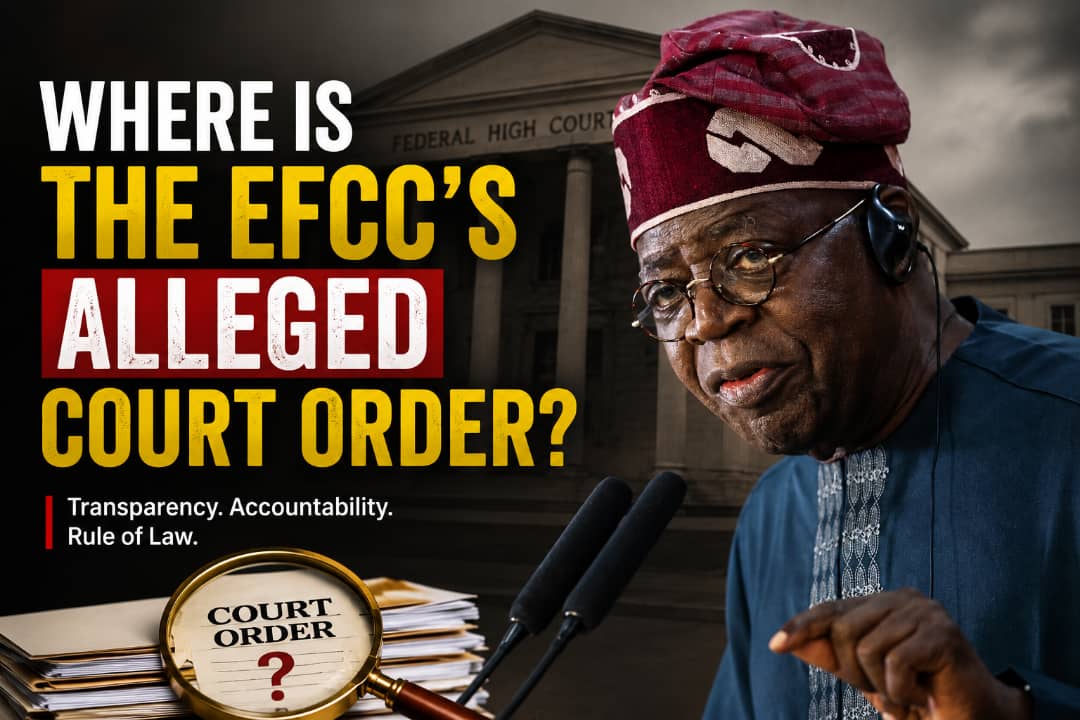
In attempting to justify the EFCC’s actions, the Presidency claimed that the Commission had obtained a court order on 5 August 2026 before freezing the accounts. That single assertion has shifted the debate from politics to legality.
If such a court order truly exists, why has no one seen it?
The EFCC’s letters to commercial banks reportedly made no mention of any judicial authorization. Its detailed public statement defending the freezing of the accounts also failed to identify the court, disclose the suit number, name the judge, or even reference the existence of an order. For an agency acting under judicial authority, these omissions are difficult to explain.
This raises a legitimate question: Is the Presidency revealing a genuine court order that the EFCC inexplicably failed to mention, or is the alleged order being introduced after the fact to provide legal cover for an action that may have exceeded the Commission’s powers?
This is not a partisan question. It is a constitutional one.
The rule of law demands more than official assurances. It demands evidence. When government actions directly affect the finances and constitutional autonomy of a state government, transparency is not optional—it is essential.
If a court indeed authorized the freezing of the accounts, the Presidency should immediately make the order public. Nigerians deserve to know the court involved, the suit number, the judge who granted it, and the legal basis upon which such an extraordinary order was made.
If, however, no such order existed before the accounts were frozen, then the issue becomes far more serious. It would suggest that the EFCC acted outside the law, undermining due process and the constitutional principles that govern Nigeria’s federal system.
This controversy is therefore no longer just about Osun State. It is about whether federal institutions can exercise enormous powers without accountability and later rely on unverified claims of judicial approval.
The Presidency has an opportunity to settle the matter once and for all. It should publish the alleged court order or acknowledge that the EFCC acted beyond its lawful authority. Anything less will only deepen public suspicion and weaken confidence in the government’s commitment to constitutionalism, transparency, and the rule of law.
In a democracy, institutions do not earn trust by asking citizens to believe them. They earn trust by producing the evidence.
About the Author