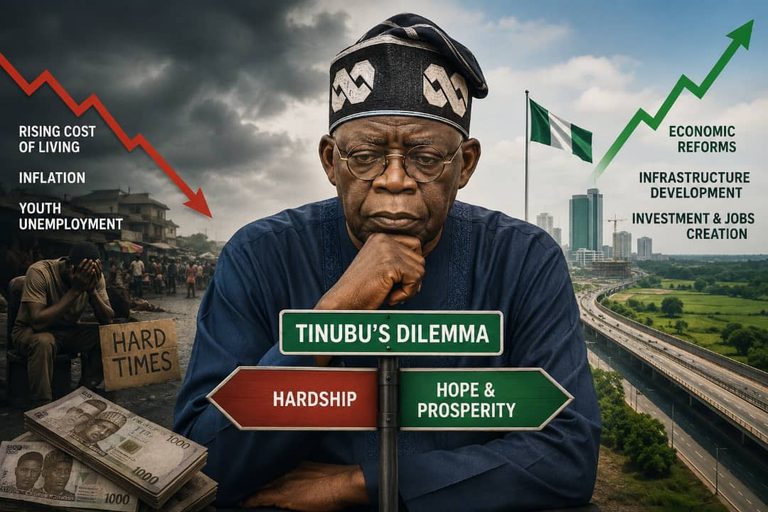
There are moments in the life of a nation that deserve more than political arguments. They demand deep reflection.
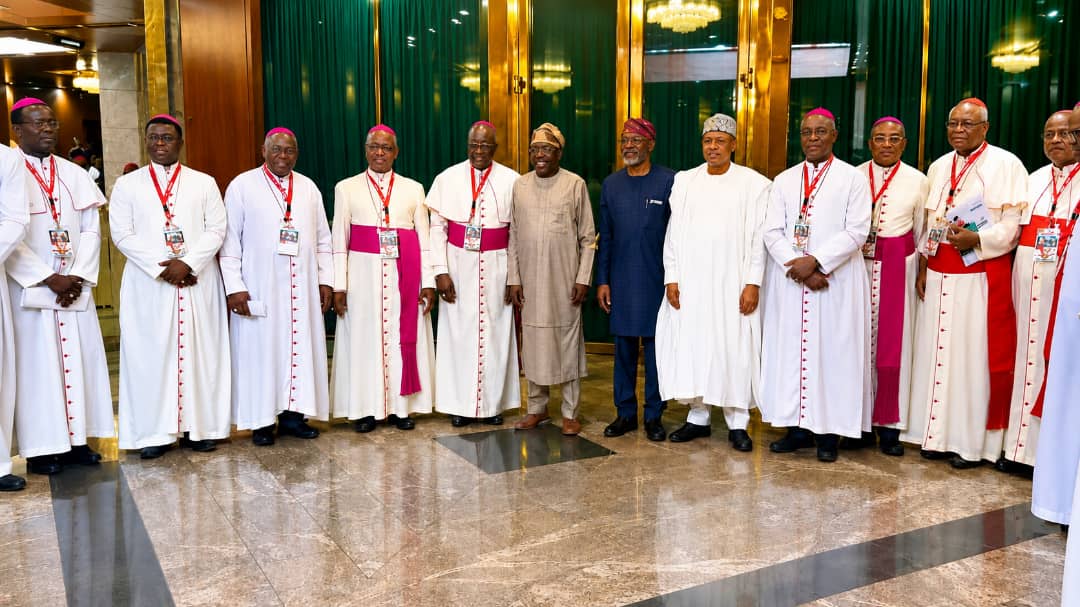
The recent disclosure by Cardinal John Onaiyekan regarding the meeting between the Catholic Bishops’ Conference of Nigeria (CBCN) and President Bola Ahmed Tinubu is one of those moments. Whether one agrees with the Church or supports the government is beside the point. What should concern every Nigerian is the apparent disconnect between the realities experienced by ordinary citizens and the responses reportedly given at the highest level of government.
The Catholic bishops did not visit the Presidential Villa to negotiate contracts, seek political appointments, or bargain for influence. Their mission was pastoral and patriotic. They carried with them the anxieties of millions of Nigerians—families struggling to feed themselves, businesses collapsing under economic pressure, young people searching endlessly for jobs, and citizens increasingly losing confidence in public institutions.
According to Cardinal Onaiyekan’s account, the bishops raised concerns about widespread hunger. The reported response was that hunger had always existed. They spoke about the crushing economic hardship confronting ordinary Nigerians, but were told the economy was doing well. They expressed worries over public confidence in INEC and the credibility of future elections, only to be reassured that the electoral body was neutral and that anyone seeking power should be prepared to “wrestle” for it.
Whether these remarks were intended to reassure or defend government policies is almost secondary. What matters is how they are likely to be perceived by millions whose daily reality is defined by soaring food prices, inflation, unemployment, insecurity, and uncertainty.
History repeatedly teaches one lesson: governments become vulnerable not simply because they make mistakes, but because they stop listening.
This is where the biblical story of Rehoboam becomes remarkably relevant.
When Rehoboam ascended the throne after Solomon, the people approached him with a simple request. They pleaded for relief from the heavy burdens imposed during his father’s reign. The experienced elders advised the young king to listen to the people and respond with compassion. They understood that leadership is strengthened through service, not intimidation.
Instead, Rehoboam rejected wise counsel and embraced the advice of younger loyalists who encouraged him to display strength rather than empathy. His response was harsh, dismissive, and disconnected from the people’s suffering.
The consequences were immediate.
The united kingdom, painstakingly built over generations by Saul, David, and Solomon, fractured in a single day. The people walked away with the unforgettable declaration:
“To your tents, O Israel!” (1 Kings 12:16).
It remains one of history’s clearest warnings against leadership that mistakes authority for infallibility.
Nigeria’s democracy may be very different from ancient Israel, but the principle remains timeless.
Every administration needs loyal supporters. Every president deserves competent advisers. However, every government also needs people courageous enough to tell uncomfortable truths. Leaders who hear only praise gradually lose the ability to hear reality.
The greatest threat to any presidency is often not the opposition. It is the culture of constant affirmation that convinces leaders everything is working while citizens are experiencing something entirely different.
No government can govern successfully on applause alone.
Political slogans cannot lower the prices of food.
Optimistic speeches cannot restore purchasing power.
Public relations campaigns cannot substitute for effective governance.
And praise singers, no matter how passionate, cannot rewrite the daily experiences of millions of Nigerians.
Constructive criticism should never be viewed as hostility. Institutions like the Catholic Church, labour unions, civil society organisations, professional bodies, and traditional leaders play an essential role in every democracy by serving as the conscience of the nation. Their responsibility is not merely to celebrate government achievements but also to speak honestly about national challenges.
Strong leaders do not fear difficult conversations. They welcome them.
President Bola Ahmed Tinubu has repeatedly assured Nigerians that the sacrifices demanded by his economic reforms will eventually produce prosperity. That promise will ultimately be judged not by speeches but by measurable improvements in the lives of ordinary citizens.
If Nigerians begin to feel genuine economic relief, renewed security, and greater confidence in public institutions, history will remember these reforms kindly. But if government continues to dismiss the concerns raised by respected voices across society, it risks widening the gap between official optimism and public reality.
History has never been kind to leaders who surrounded themselves exclusively with applause.
The lesson from Rehoboam is not merely a religious story. It is a political warning that echoes across generations: when leaders stop listening, history begins speaking—and history is rarely gentle.
Nigeria deserves leadership that listens before it lectures, engages before it dismisses, and responds before frustration hardens into disillusionment.
The hope of every patriot should be that this administration chooses the path of wisdom rather than the path of pride.
Because nations are not sustained by propaganda.
They are sustained by trust.
And trust begins when leaders genuinely listen to the people they were elected to serve.
About the Author