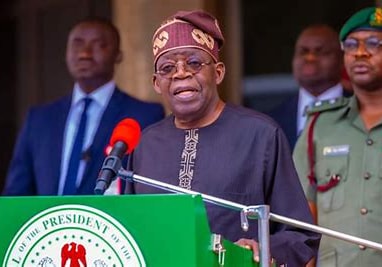
President Bola Ahmed Tinubu’s 66th Independence Day address was carefully constructed around a powerful message: Nigeria has passed through the difficult phase of reform and is now entering an “age of prosperity.”
The President spoke of an economy growing by more than four per cent, declining inflation, rebuilt foreign reserves, a more stable foreign exchange market and increased non-oil exports. He argued that the painful reforms introduced since 2023 were necessary to correct longstanding economic distortions.
On paper, these are significant claims.
But Independence Day speeches are ultimately tested not only by economic statistics, but by the experience of ordinary citizens.
And this is where the President’s message meets an uncomfortable question:
Does the Nigeria described from the presidential podium look like the Nigeria Nigerians experience in their homes, markets, farms and businesses?
Tinubu said prosperity means a Nigeria where farmers can cultivate safely, factories have reliable electricity, young people find productive work, food and transportation become affordable and families can look to the future with confidence.
That definition creates a standard against which the administration itself can be measured.
If prosperity means affordable food, Nigerians must be able to feel the difference when they enter the market.
If prosperity means productive employment, young Nigerians must see more opportunities beyond survival and informal work.
If prosperity means security, farmers must be able to return to their farms without fear.
If prosperity means reliable electricity, manufacturers and small businesses must spend less of their scarce resources keeping their businesses alive.
And if prosperity means dignity, citizens should not have to constantly adjust their dreams downward simply because the cost of living keeps challenging their income.
This is why the President’s declaration that “the emergency treatment is over” deserves scrutiny.
The question is not whether reforms were necessary.
The question is whether the benefits of those reforms are reaching the people who were asked to make the sacrifices.
THE NUMBERS VERSUS THE DINNER TABLE
There is a legitimate argument that macroeconomic stability matters.
A growing economy, improved foreign reserves, greater export earnings and a more stable foreign exchange market can provide the foundation for long-term development.
But economic growth does not automatically translate into improved living standards.
A country can record growth while many households still struggle with food, rent, transport, school fees, healthcare and electricity.
That is the gap between economic recovery and lived prosperity.
The President himself acknowledged that prosperity should not merely mean “abstract numbers or better statistics.”
That statement may ultimately become the most important test of his speech.
Because Nigerians do not eat GDP.
They do not pay school fees with foreign reserves.
They do not buy fuel with export statistics.
They experience government through the prices they pay, the jobs they find, the security they enjoy and the services they receive.
WHAT ABOUT INSECURITY?
Another noticeable feature of the address was the limited attention given to the country’s current security situation.
The President acknowledged insecurity as part of Nigeria’s historical difficulties and praised members of the Armed Forces and security services. But the speech did not provide a detailed assessment of today’s security challenges or announce specific new measures, targets or timelines for tackling terrorism, banditry and kidnapping.
For communities affected by insecurity, this is not an abstract policy issue.
A farmer prevented from reaching his farm does not experience prosperity.
A family displaced by violence does not experience prosperity.
A businessman afraid to travel between communities does not experience prosperity.
Security is therefore not a side issue in the prosperity conversation. It is one of its foundations.
THE ELECTRICITY QUESTION
The President spoke about a Nigeria where factories have reliable power and businesses can operate at lower cost. He also mentioned using gas to power new industries.
But again, the difference between a promise and reality lies in implementation.
For manufacturers, artisans, shops and small businesses, electricity is not merely an infrastructure statistic. It is part of the cost of doing business.
When electricity is unreliable, businesses pay for alternatives.
Those costs eventually find their way into the prices consumers pay.
So when the government promises lower production costs, Nigerians are justified in asking:
When will they actually feel those lower costs?
THE REAL MEASURE OF THE SPEECH
President Tinubu’s Independence Day address was not without substance. His administration can point to economic indicators that suggest improvements in some areas, and those developments deserve to be acknowledged.
But government should not ask citizens to celebrate statistics while ignoring their lived experiences.
The real success of the reforms will not ultimately be determined by the elegance of a presidential speech.
It will be determined by whether a mother can feed her children more easily.
Whether a young graduate can find meaningful work.
Whether a farmer can safely cultivate his land.
Whether a manufacturer can operate without unbearable energy costs.
Whether families can afford transportation.
Whether citizens can sleep without fear.
Whether Nigerians can begin to believe that tomorrow will genuinely be better than today.
That is the Nigeria the President described in his speech.
And that is precisely why Nigerians have every right to hold the government accountable for turning the promise into reality.
The President says Nigeria has moved from reform to prosperity. The next chapter must therefore answer a simple question: when will prosperity move from the presidential speech into the Nigerian household?
Because independence is not merely the freedom to celebrate a nation once a year.
True independence must eventually be felt in the freedom to live with dignity.
About The Author